


Biotinylation Reagents
Biotinylation Reagents & Streptavidin Systems
Introduction
Biotinylation is a powerful technique for labeling proteins and nucleic acids. APExBIO offers a complete ecosystem of biotin reagents (NHS-ester, Maleimide, PEG-linkers) and high-affinity Streptavidin conjugates (HRP, Fluorophores, Magnetic Beads) for high-sensitivity detection and purification.
Overview
What is Biotinylation?
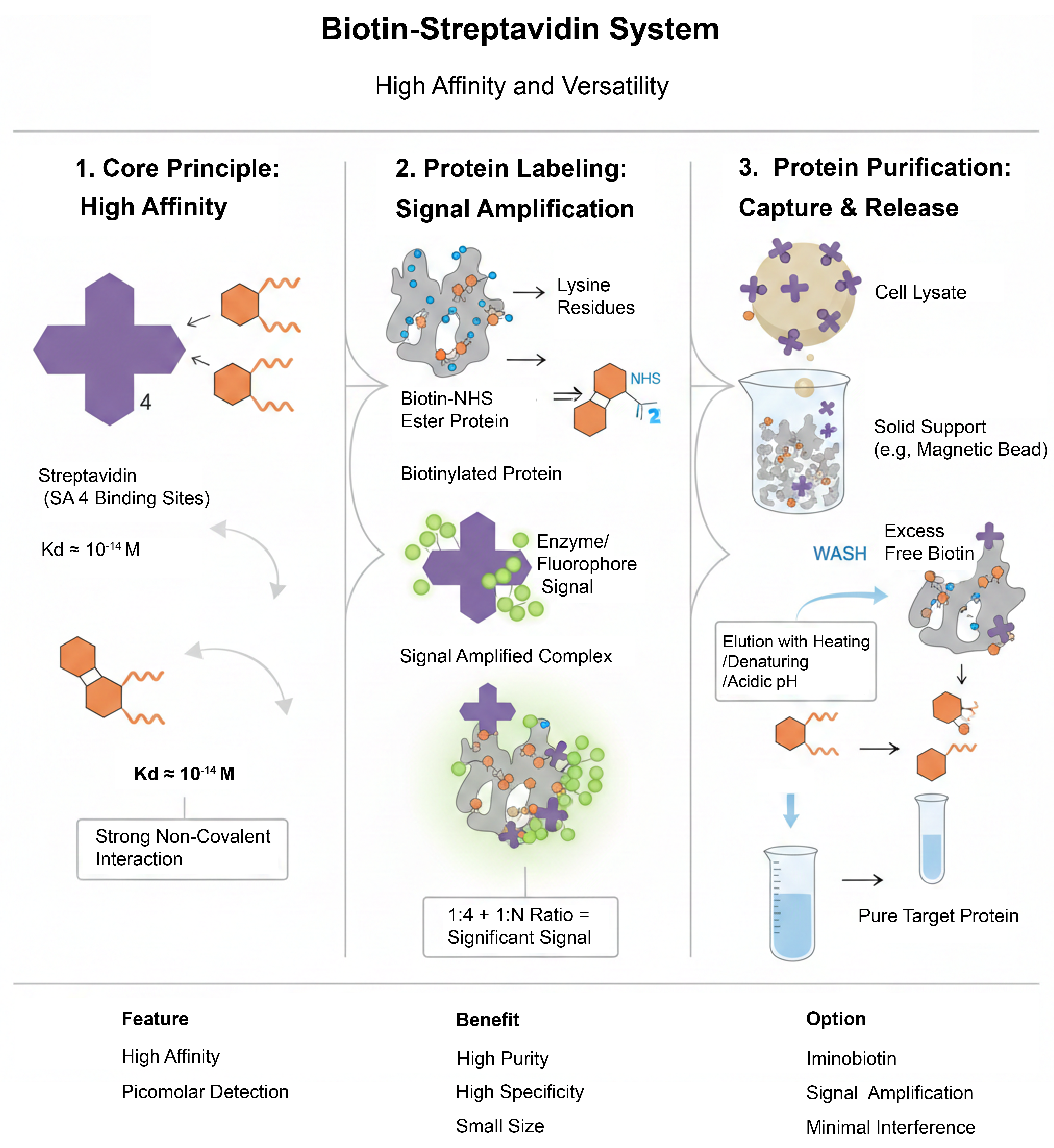
Biotinylation is the process of covalently attaching Biotin (Vitamin H) to a target molecule. This leverages the Biotin-Streptavidin interaction, which is the strongest non-covalent biological bond (Kd ≈ 10-14 M).
Application
- Protein Enrichment: Using Streptavidin magnetic beads for pull-down assays.
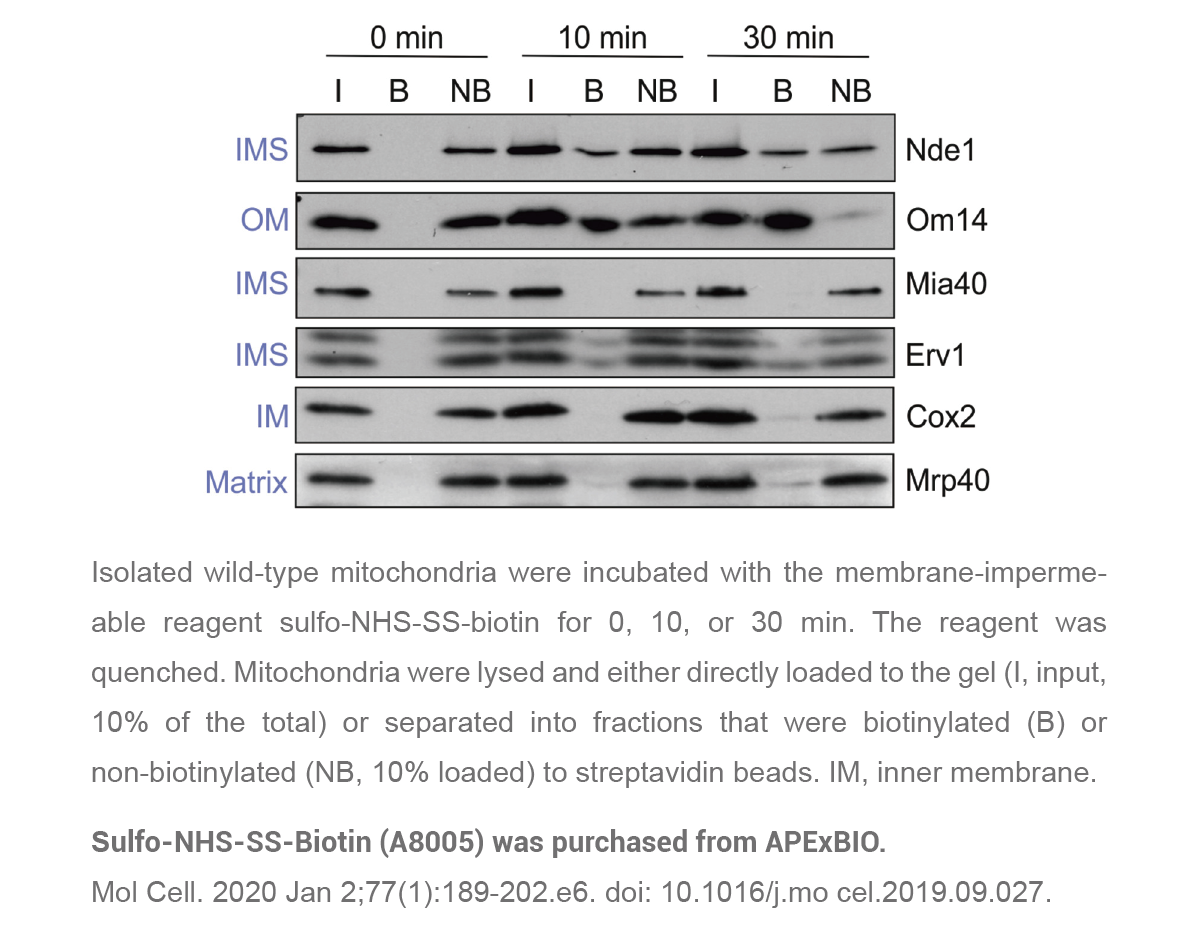
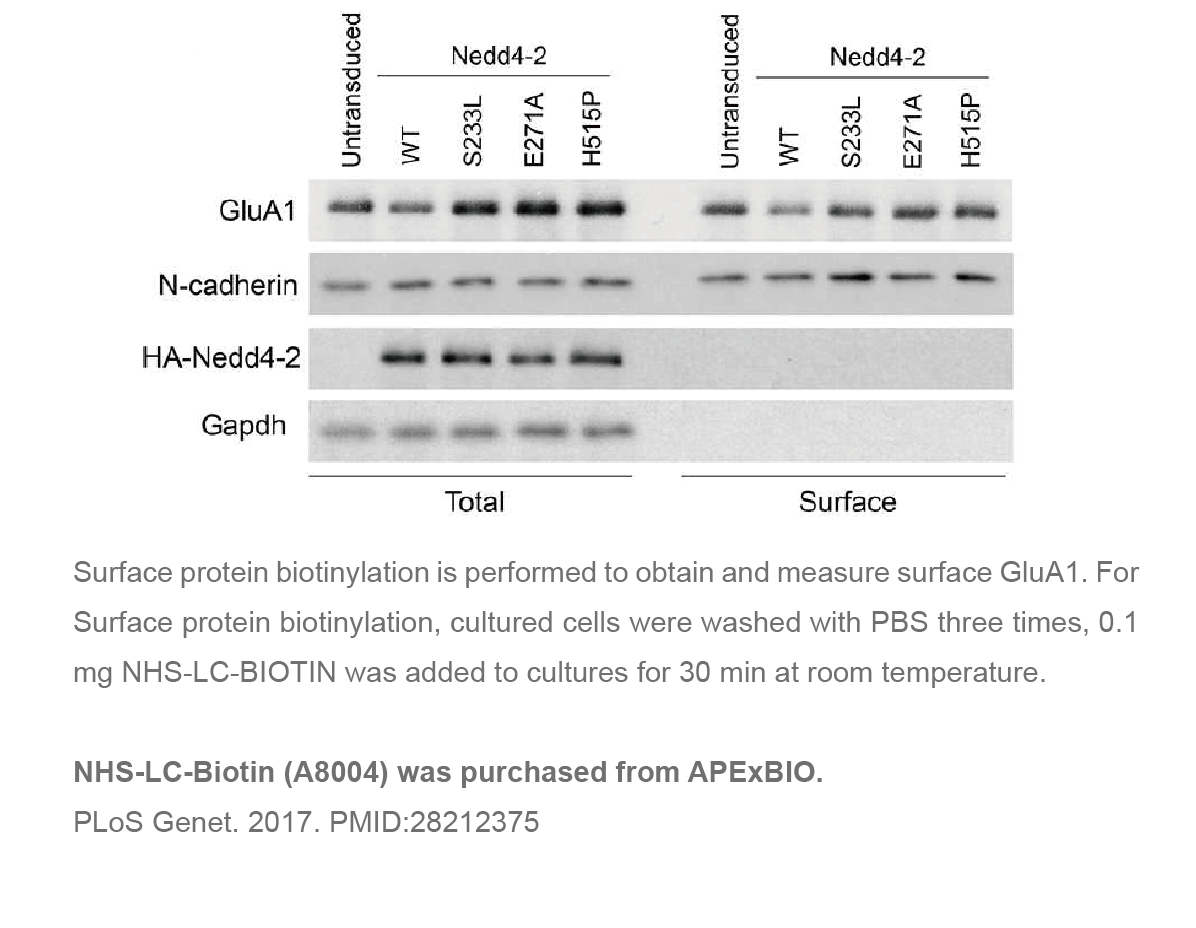
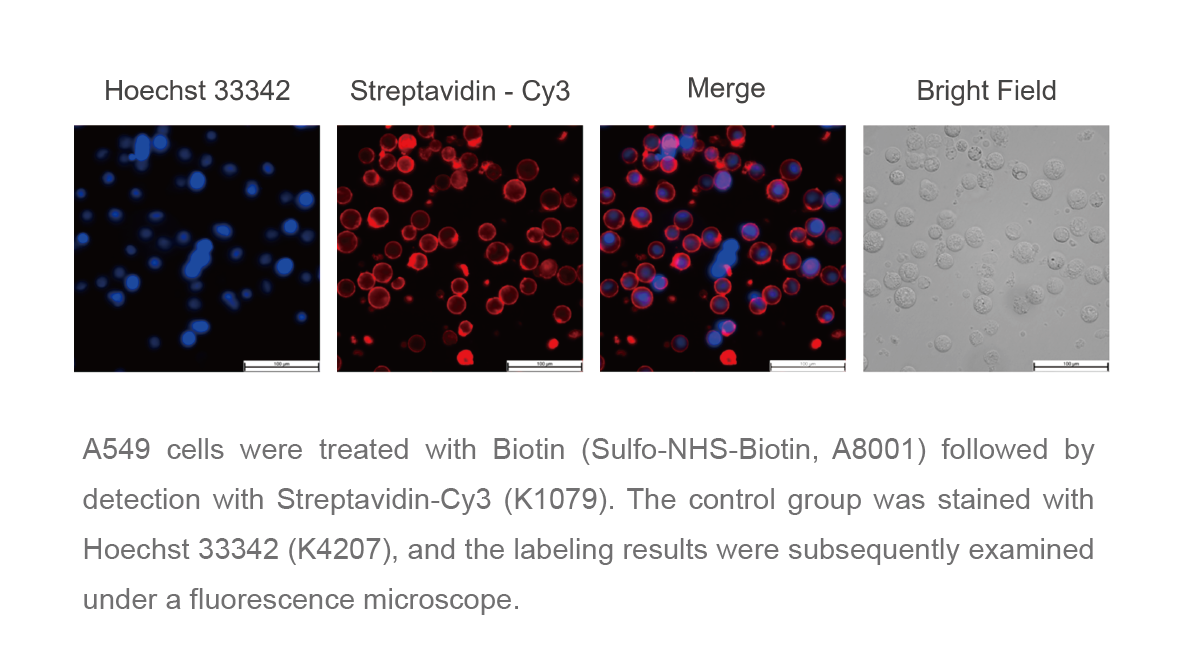
- Surface Labeling: Identifying membrane proteins via non-permeable biotin tags.
- Signal Amplification: Enhancing Western Blot and ELISA sensitivity using Streptavidin-HRP.
- Proximity Labeling: Mapping protein-protein interactions (PPI) in live cells.
Workflow
Choosing the Right Biotinylation Reagent
You can choose biotin tags based on their reactivity and solubility:Selection
| Selected By | Features | Application | Proudct | ||||||||||||||||||||||||||||||||
|---|---|---|---|---|---|---|---|---|---|---|---|---|---|---|---|---|---|---|---|---|---|---|---|---|---|---|---|---|---|---|---|---|---|---|---|
| Solubility & Membrane Permeability |
|
||||||||||||||||||||||||||||||||||
| Spacer Arm Length |
|
||||||||||||||||||||||||||||||||||
| Functional Linkers |
|
||||||||||||||||||||||||||||||||||
| AviTag & Magnetic Beads |
|
||||||||||||||||||||||||||||||||||
Validation
Streptavidin Detection & Capture Systems
After labeling, use APExBIO’s high-purity Streptavidin products for visualization and isolation:Selection
| Selected By | Features | Application | Proudct | ||||||||||||
|---|---|---|---|---|---|---|---|---|---|---|---|---|---|---|---|
| Streptavidin Magnetic Beads |
|
||||||||||||||
| Streptavidin Conjugates |
|
||||||||||||||
| Biotin-tyramide |
|
||||||||||||||
Validation
Frequently Asked Questions
Peer-Reviewed Citations
APExBIO's Biotin-Streptavidin system is validated in high-impact journals:
Bide Tong, Xiaoguang Zhang, et al. "Extracellular vesicle-based targeted protein degradation platform for
multiple extracellular proteins."
EMBO Molecular Medicine. 2026 Jan 12. PMID: 41526766 (A8001)
Chao Wei, Wei Jiang, et al. "Brain endothelial GSDMD activation mediates inflammatory BBB breakdown."
Nature. 2024 May;629(8013):893-900. PMID: 38632402 (A8001)
Benson M. George, Maria Eleftheriou, et al. "Treatment of acute myeloid leukemia models by targeting a cell
surface RNA - binding protein."
Nature Biotechnology (2025) (A8005)
Neuza Domingues , Steve Catarino, et al. "Connexin43 promotes exocytosis of damaged lysosomes through actin
remodelling."
EMBO Journal 2024 Jul 23. PMID: 39044100 (A8005)
Fang Ye, Zhikang Yuan, et al. "Endocytic activation and exosomal secretion of matriptase stimulate the second
wave of EGF signaling to promote skin and breast cancer invasion."
Cell Reports 2024 Apr 23;43(4):114002. PMID: 38547126 (A8005)
Shraddha Subramanian, Alexes C. Daquinag, et al. "Characterization of peptides targeting metastatic tumor cells
as probes for cancer detection and vehicles for therapy delivery."
Cancer Research 2021 Nov 15;81(22):5756-5764. PMID: 34607842 (K1001)
Songzi Liu, Xiaoge Zhang, et al. "Mammalian IRE1α dynamically and functionally coalesces with stress granules."
Nature Cell Biology 2024 Jun;26(6):917-931. PMID: 38714852 (A8011)
Tzu-Yuan Chiu, Daniel C. Lazar, et al. "Chemoproteomic development of SLC15A4 inhibitors with anti-inflammatory
activity."
Nature Chemical Biology 2024 Jan 8. PMID: 38191941 (A8011)
Wei Qin, Samuel A. Myers, et al. "Spatiotemporally-resolved mapping of RNA binding proteins via functional
proximity labeling reveals a mitochondrial mRNA anchor promoting stress recovery."
Nature Communications 2021 Aug 17;12(1):4980. PMID: 34404792 (A8011)