

Safe DNA Gel Stain
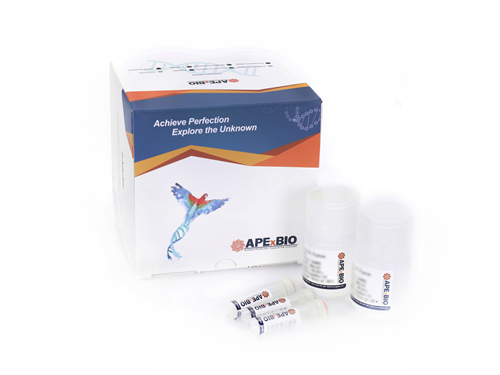
Safe DNA Gel Stain is a highly sensitive stain for visualization of DNA or RNA in agarose or acrylamide gels. It is specifically formulated to be a less hazardous alternative to ethidium bromide (EB) that can be used with either blue-light or UV excitation.
Safe DNA Gel Stain is a better nucleic acid staining reagent for all your molecular biology research needs. It is not only environmental friendly but also good for your sample.
Safe DNA Gel Stain is supplied as 10000X concentrate in DMSO and used in the same way as ethidium bromide solution. It is also suitable for staining RNA in gels.
Cloning efficiency of DNA fragments is improved by using Safe DNA Gel Stain and blue-light, compared with using ethidium bromide and UV light exposure.
- 1. Gustavo Rocha, Maria Júlia M Corrêa, et al. "Host preference and resting behavior of Anopheles coluzzii (Diptera: Culicidae) on the island of São Tomé, West Africa." J Med Entomol. 2026 Mar 11;63(2):tjag026. PMID: 41812224
- 2. Adam Roberts, Dushanth Seevaratnam, Ferguie B. Solis. "Designing a locally produced DENV-1 nucleic acid diagnostic for low resource regions with endemic disease." Anal Methods. 2025 Oct 23;17(41):8489-8501. PMID: 41090382
- 3. Devon D Dennison, Ryan D Baldridge. "Ubiquitin chain variability directs substrates of the Tul1 ubiquitin ligase complex to different degradation pathways." J Cell Biol (2025) 224 (9): e202312133. PMID: 40694054
- 4. Noa Asculai, Jonathan Molcho, et al. "Functional characterization of MrOrb in Macrobrachium rosenbergii reveals its crucial role in spermatogenesis." Int J Biol Macromol. 2025 Jul 4;320(Pt 1):145774. PMID: 40617438
- 5. L Chen, M Kaypaghian, et al. "Alcohol, Anti-HIV Drugs, and/or Hippuric Acid Deteriorate Cellular Stresses in Senescent Hepatocytes and Aging Murine Liver." J Addict Prev. 2025 Aug;13(1): PMID: 40463894
- 6. Hannah Sleath, Bortolo M. Mognetti, et al. "HaptotacticMotion of Multivalent Vesicles Along Ligand-DensityGradients." Langmuir. 2025 May 13;41(18):11474-11485. PMID: 40300068
- 7. Adam S. Hirschfeld, Julia O. Misiorek, et al. "Spinocerebellar ataxia 27B (SCA27B)—a systematic review and a case report of a Polish family." J Appl Genet. 2025 Dec;66(4):895-902. PMID: 40299270
- 8. Kaylee E Dillard, Hongshan Zhang, et al. "Mechanism of Cas9 inhibition by AcrIIA11." Nucleic Acids Res. 2025 Apr 22;53(8):gkaf318. PMID: 40277083
- 9. Zhichao Tang, Shalakha Hegde, et al. "Chemical-guided SHAPE sequencing (cgSHAPE-seq) informs the binding site of RNA-degrading chimeras targeting SARS-CoV-2 5' untranslated region." Nat Commun. 2025 Jan 8;16(1):483. PMID: 39779694
- 10. Zainul Khan, Tinley Hathaway, Chenggen Chu. "Development of an improved Agrobacterium-mediated transformation and callus-based regeneration system for sugarbeet (Beta vulgaris L.)." Plant Cell Tiss Organ Cult 163, 30 (2025).
- 11. Chin Yee Tan, Danting Jiang, et al. "A commensal-derived sugar protects against metabolic disease." bioRxiv. 2024 Jun 12:2024.06.12.598703. PMID: 38915674
- 12. Ricardo A Meléndez, Daniel T Wynn, et al. "Exploring the role of Casein Kinase 1α Splice Variants Across Cancer Cell Lines." Biochem Biophys Res Commun. 2024 Sep 3:723:150189. PMID: 38852281
- 13. Zhenzhao Sun, Ming Wang, et al. "Getah virus capsid protein undergoes co-condensation with viral genomic RNA to facilitate virion assembly." Int J Biol Macromol. 2024 Apr;265(Pt 1):130847. PMID: 38490381
- 14. Jonathan Molcho, Dana Albagly, et al. "Regulation of early spermatogenesis in the giant prawn Macrobrachium rosenbergii by a GCL homolog." Biol Reprod. 2024 Feb 26:ioae028. PMID: 38408206
- 15. Courneya, Isaac Terrance. "Effects of Synonymous and Nonsynonymous CYP51 Mutations on DMI Resistance in Cercospora beticola." North Dakota State University ProQuest Dissertations & Theses, 2024. 31147462
- 16. Austin D C Miller, Soham P Chowdhury, et al. "Engineering water exchange is a safe and effective method for magnetic resonance imaging in diverse cell types." bioRxiv. 2023 Nov 10:2023.11.07.566095. PMID: 37986852
- 17. Nicolas I E Rocos, Felicity J Coulter, et al. "The minor chicken class I gene BF1 is deleted between short imperfect direct repeats in the B14 and typical B15 major histocompatibility complex (MHC) haplotypes." Immunogenetics. 2023 Oct;75(5):455-464. PMID: 37405420
- 18. Zhichao Tang, Shalakha Hegde, et al. "Chemical-guided SHAPE sequencing (cgSHAPE-seq) informs the binding site of RNA-degrading chimeras targeting SARS-CoV-2 5'untranslated region." bioRxiv. 2023 Oct 23:2023.04.03.535453. PMID: 37066172
- 19. Wynne, Max Alexander, et al. "Investigation of the structure and function of SecH, a novel component of the Sec machinery in Escherichia coli." University of Birmingham. 2023
- 20. Hannah Sleath, Bortolo Mognetti, et al. "Chemotactic crawling of multivalent vesicles along ligand-density gradients." Cornell University. 16 Oct 2023
- 21. Daniel Larcombe-Young, Lynsey Whilding, et al. "Generation of human parallel chimeric antigen receptor (pCAR) T cells to achieve synergistic T cell co-stimulation." STAR Protoc. 2022 May 21;3(2):101414. PMID: 35620078
- 22. Soo Khim Chan, Zhongchao Zhao, et al. "Isolation of a Peptide That Binds toPseudomonas aeruginosaLytic Bacteriophage." ACS Omega 2022, 7, 42, 38053–38060
- 23. Joseph Oddy, Rocío Alarcón-Reverte, et al. "Reduced free asparagine in wheat grain resulting from a natural deletion of TaASN-B2: investigating and exploiting diversity in the asparagine synthetase gene family to improve wheat quality." BMC Plant Biol. 2021 Jun 29;21(1):302. PMID: 34187359
- 24. Shen Y, Ha W, et al. "Exome sequencing identifies novel mutation signatures of UV radiation and trichostatin A in primary human keratinocytes." Sci Rep. 2020;10(1):4943 PMID: 32188867
- 25. Halle-Wittenberg. "SERF is a modifier of amyloid formation." Martin-Luther-Universität
- 26. Urrutia G, Salmonson A, et al. "Combined Targeting of G9a and Checkpoint kinase 1 Synergistically Inhibits Pancreatic Cancer Cell Growth by Replication Fork Collapse." Mol Cancer Res. 2019 Dec 10. pii: molcanres.0490.2019 PMID: 31822519
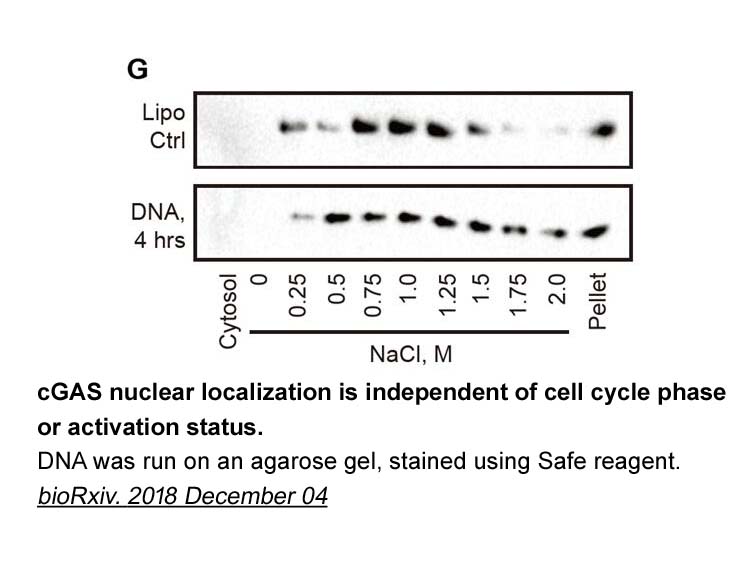
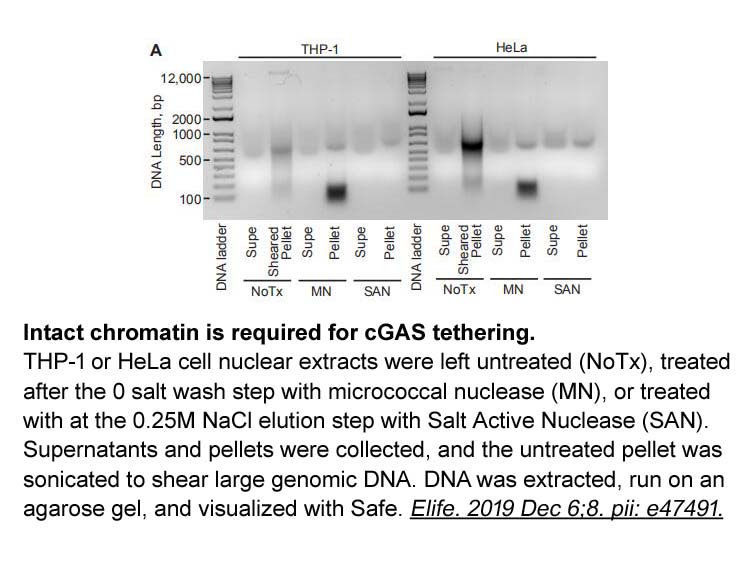
- 27. Volkman HE, Cambier S, et al. "Tight nuclear tethering of cGAS is essential for preventing autoreactivity." Elife. 2019 Dec 6;8. pii: e47491 PMID: 31808743
- 28. Hannah E Volkman, Stephanie Cambier, et al. "cGAS is predominantly a nuclear protein." bioRxiv. 2018 December 04
• Reduce exposure to highly mutagenic EB and harmful UV light.
Safe DNA Gel Stain is less mutagenic and safer for you to work with than ethidium bromide. You can further decrease your exposure risk by using visible blue-light with Safe stain rather than UV. This is especially valuable when performing exposure-intensive protocols like cutting bands out of gels.
• Increase sensitivity by reducing nonspecific background fluorescence.
Safe DNA Gel Stain offers excellent sensitivity in nucleic acid visualization with either UV excitation or blue-light excitation. When bound to nucleic acids, the green-fluorescent Safe stain has fluorescence excitation max at ~280 and ~502 nm, and an emission max at ~530 nm. Plus, when used with blue light, Safe DNA Gel Stain has less background fluorescence than ethidium bromide–stained gels with UV light.
• Alternative to EB for all staining applications, including RNA staining.
Safe DNA Gel Stain is supplied as a concentrate in DMSO which can be used in the same way as ethidium bromide. It can be added into an agarose gel for staining during electrophoresis at a ratio of 1: 10000 or apply it after electrophoresis at a ratio of 1: 3300. Store at room temperature in its original packaging to avoid excessive light exposure.
Note: Safe DNA Gel Stain is less efficient in visualizing low molecule weight bands (100-200 bp).
| Physical Appearance | DMSO solution |
| Storage | Store at room temperature, protect from light for 6 months. |
| M.Wt | 504.66 |
| Formula | C28H28N2O3S2 |
| Solubility | insoluble in EtOH; insoluble in H2O; ≥14.67 mg/mL in DMSO |
| Shipping Condition | Small Molecules with Blue Ice, Modified Nucleotides with Dry Ice. |
| General tips | We do not recommend long-term storage for the solution, please use it up soon. |
Quality Control & DataSheet
- View current batch:
Related Biological Data
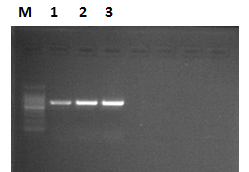
Related Biological Data
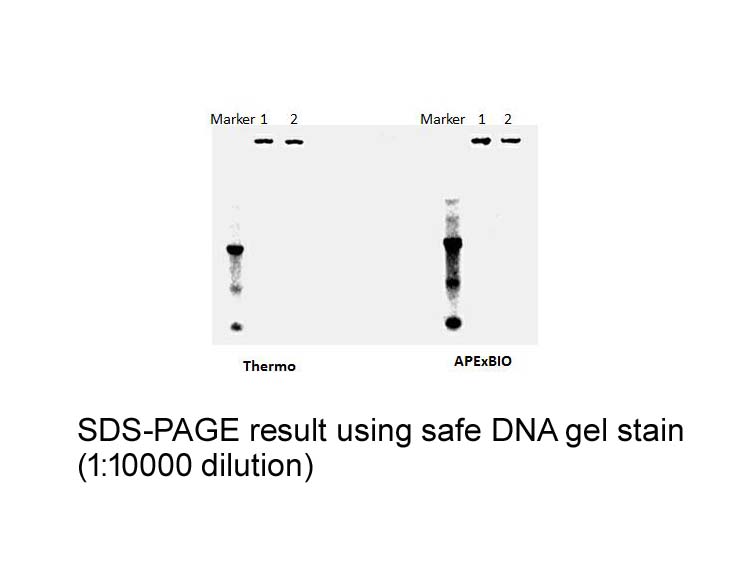
Related Biological Data
Related Biological Data
1. Q: How should the gel stain be handled? Can it be added directly during gel preparation?
A: This product is a 10,000× concentrate dissolved in DMSO. When preparing agarose gels, you can dilute it into the agarose gel buffer (1× TBE or 1× TAE) at 1:10,000, then add agarose powder and heat to dissolve. Alternatively, you can add the dye at 1:10,000 to the molten agarose gel solution before it solidifies. You may also choose to stain post‑electrophoresis by incubating the gel in a Safe DNA staining solution (diluted 1:3,300 in 1× TBE or 1× TAE).
2. Q: When staining with Safe DNA gel stain, which excitation wavelengths can be used for visualization? How should they be selected?
A: Safe DNA gel stain has two major excitation peaks: one in the UV range at 280 nm and one in the visible range at 502 nm. Therefore, 254 nm or 300 nm UV excitation light, as well as a 488 nm laser, a 470 nm LED, and broad-spectrum blue light sources can all effectively excite the dye. It is recommended to use blue light rather than UV to excite Safe DNA gel stain, because blue light minimizes DNA damage, improves cloning efficiency, reduces nonspecific background fluorescence, and lowers exposure risk.
3. Q: Can an EB (ethidium bromide) filter and its corresponding camera settings be used to visualize Safe DNA gel stain?
A: The maximum emission wavelength of Safe DNA gel stain is 530 nm. An EB filter that transmits light above 500 nm, together with the corresponding camera settings, is suitable for Safe DNA gel stain, and usually only minor adjustments to exposure time or illumination are needed. If the EB filter only transmits light at 600 nm or above, it is not suitable for Safe DNA gel stain.
4. Q: Is Safe DNA gel stain experimentally compatible with ethidium bromide (EB) in the same way?
A: Safe DNA gel stain is compatible with all current downstream applications of EB, including excising PCR products from gels, gel purification, cloning, and RNA staining. Safe DNA gel stain is non‑mutagenic and non‑toxic, making it a safer alternative to EB.
5. Q: What precautions should be taken when using Safe DNA gel stain?
A: Safe DNA gel stain is effective only within a narrow pH range of approximately pH 7–8; outside this range, the fluorescence signal will rapidly disappear. In addition, its performance is relatively poor when staining low‑molecular‑weight nucleic acids (100–200 bp), so it is not recommended for such fragments. Avoid reusing the same Safe DNA staining solution for a second gel, as this will greatly reduce its sensitivity.